

India has multiple reasons for disliking Bangladesh. In the aftermath of the event of the ouster of all-weather friend Sheikh Hasina from power in August 2024. If we look into previous regimes, Delhi developed heightened relations with Sheikh Mujibur Rahman (1972-1975) and her daughter, Sheikh Hasina (1976-2001 and 2009-2024).
Why? The Awami League party was literally owned by the Sheikhs family was tilted to India when their government was in power. The people did not like it, and thousands of critics, dissidents, opposition, and also journalists were severely punished by both the autocratic regimes.
Not only the Awami League, but also the Bangladesh Nationalist Party (BNP) and Jatiya Party. When the military junta of liberation war veteran General Ziaur Rahman (1977-1981) and the other by General Hussain Muhammad Ershad (1982-1990) floated their parties and recruited politicians mostly from the former defunct Muslim League and pro-Maoist parties. Interestingly, the South Block in Delhi had love and hate relations with both the Rahman and Ershad, but both regimes were suspicious and careful of the giant neighbor.
India reciprocated not-so-warm diplomatic relations, but each others leaders were on reciprocal official state visits to Delhi and Dhaka. Presently, Delhi is not happy with the sudden change of regime in Dhaka. The 36-day Monsoon Revolution street protest by Gen Z forced Prime Minister Sheikh Hasina to quit and flee. She sought political asylum in India.
He was speaking at an event organized by the Asia Society and the Asia Society Policy Institute in New York last week, which was moderated by Dr Kyung-wha Kang, president and CEO of the Asia Society. He said Indias hosting of Hasina has created all sorts of problems in the country and is responsible for the deaths of hundreds of young people, and is not helping bilateral ties between the neighbors.
The United Nations human rights body (OHCHR) claimed that nearly 1,400 people, including students, daily wage earners, vendors, public transport drivers, and children.
He flagged a piece of fake news claiming that the youth who brought about change in Bangladesh are Taliban.
The Godi media and BJP stalwarts blamed Yunus for interfering in India and attempting to stir a separatist movement in the landlocked states, which will usher in Chinas military presence in the conflict. He also mentioned Nepal and Bhutan. The countries welcomed the proposal, which will facilitate their exports through Bangladesh.
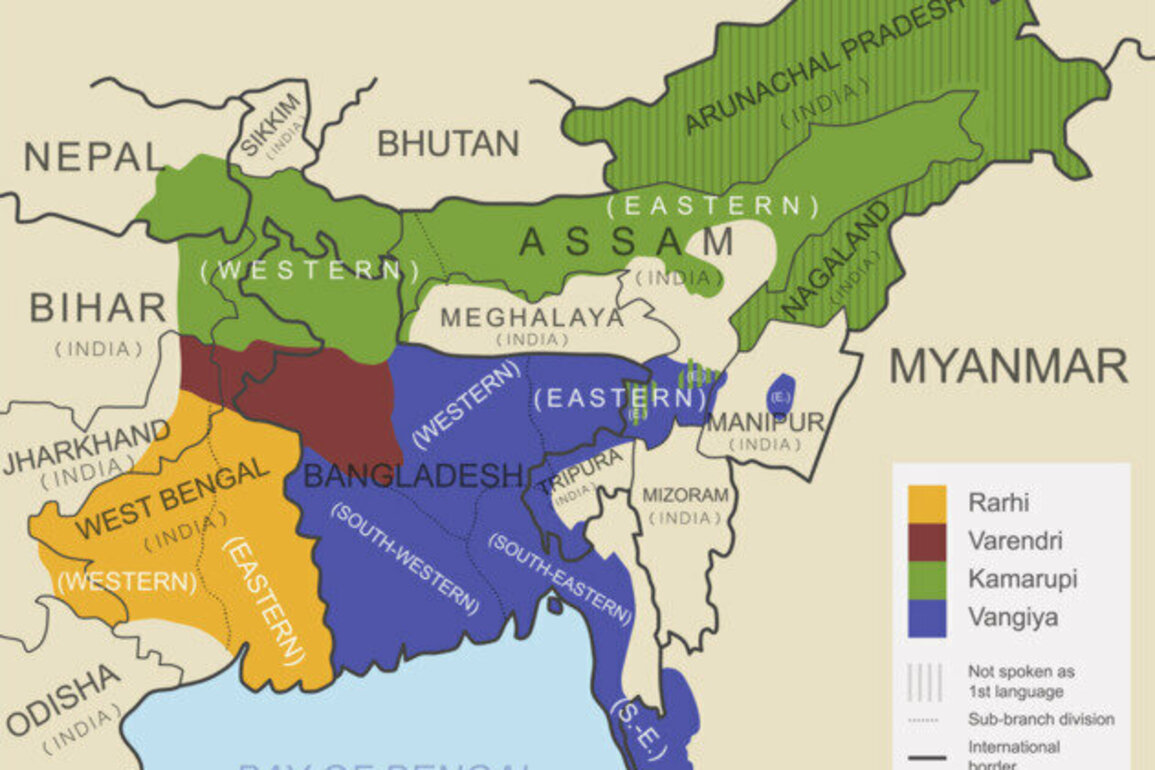
Earlier regional studies suggested that both Bangladesh and Northeast India need to scale up their multi-modal connectivity, which would not only help the region to raise its competitiveness but also narrow long-standing regional development gaps.
The port would immensely benefit economically and create jobs in Northeast Indian states, and Japan proposed a plan for road infrastructure for fast communication to the Bay of Bengal, and also developed backward linkage industries.
Japan has proposed developing an industrial hub in Bangladesh with supply chains to the landlocked northeast states of India, Nepal, and Bhutan beyond by developing a port and connectivity in the region, under the Bay of Bengal Industrial Growth Belt (BIG-B) initiative.
The connectivity will bring synergy in trade facilitation and build express corridors for the transshipment and transit of goods from northeast India to the Bangladesh port in Chattogram.
The former Japanese Prime Minister, Fumio Kishida, Japans Free and Open Indo-Pacific (FOIP) Vision, focused particularly on emerging economies and developing countries in the Indo-Pacific region and territories vulnerable to climate change and natural disasters.
It comes after Kishida visited India in March 2023, where he touted the idea of a new industrial hub for the Bay of Bengal and Northeast India that could bolster development in the impoverished region of 300 million people.
After Kishida visited India, Japan approved $1.27 billion to Bangladesh for three infrastructure projects including an enormous commercial port in the Bay, which will be equivalent to the Port of Colombo in Sri Lanka or the Port of Singapore in terms of water depths, said a JICA (Japan International Cooperation Agency) official in charge of the project.
After the Japanese Prime Ministers official visit, top Japanese officials visited New Delhi, Guwahati (Assam), Agartala (Tripura), and in Dhaka (Bangladesh). When Japan proposed the port and the economic emancipation of the majoritarian ethnic communities in the Northeast in 2023, the Indians cheered, after Japanese top officials made presentations in the Indian cities.
Japan wants her physical presence in the Bay of Bengal. As prestigious Japanese media Nikkei Asia writes, Bangladeshs ambitious deep-sea port promises a strategic anchor for Japan and India.
A mega seaport under construction is shaping up to be a strategic linchpin for Japan and India as the QUAD (Quadrilateral Security Dialogue) partners (Australia, India, Japan, and the United States) aim to counter Chinese influence in the South China Sea.
The Red Sun, as Japan is branded, plans to build a Bengal Northeast India industrial value chain in cooperation with India and Bangladesh to foster growth in the region.
A mega deep-sea port at Matarbari, in southeast Bangladesh waters, is expected to be completed in 2027. The complex will take a major load off of the countrys main Chattogram (formerly Chittagong) port and a trade gateway for northeast India, which would be less than 100 kilometers from the massive port facility.
Whatever the geopolitical strategy, the deep-sea port project has the potential to improve regional trade ties, boost investment, create jobs, and support infrastructural development, spurring economic growth for Bangladesh, Northeast India, Nepal, and Bhutan, as well as the surrounding areas of the Bay of Bengal.
First published inStratheia Policy Journal, Islamabad, Pakistan, 27 September 2025
Saleem Samad is an independent journalist based in Bangladesh and a media rights defender with Reporters Without Borders. He is the recipient of the Ashoka Fellowship and the Hellman-Hammett Award. He could be reached at
Pressenza New York