

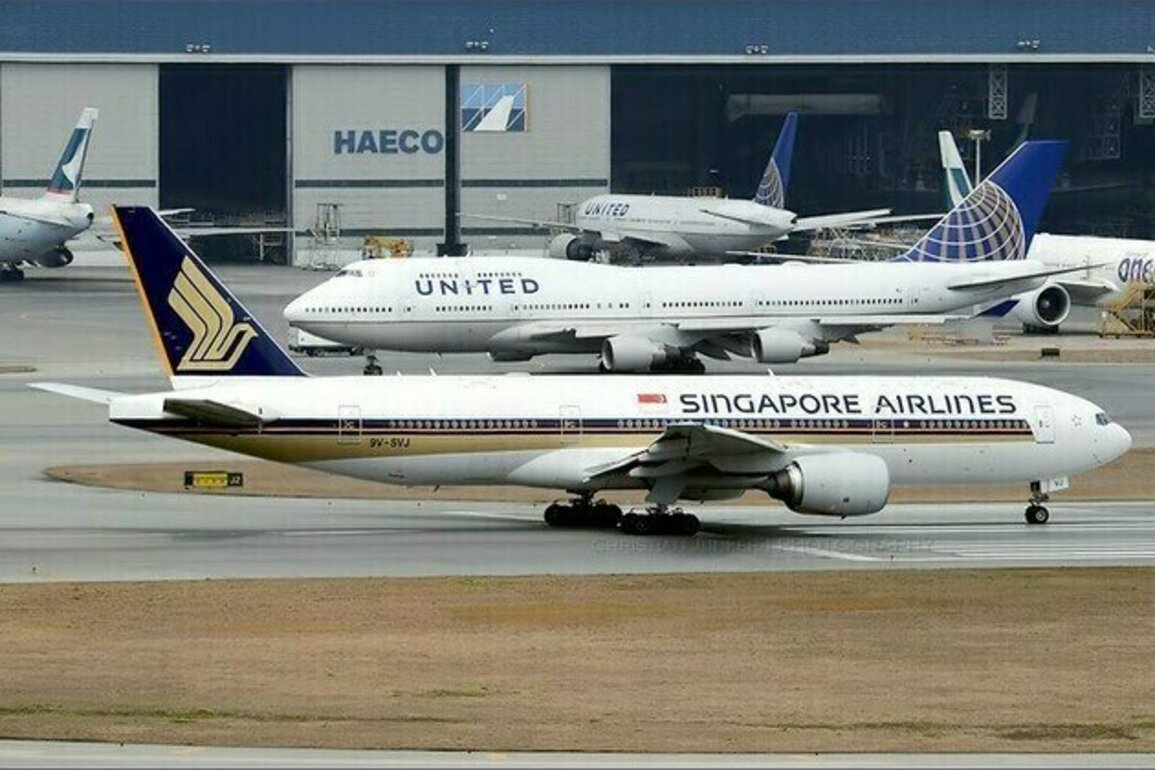
Singapore's new aviation plan includes updated measures to protect passengers during severe turbulence, which scientists expect will occur more frequently as climate change advances.
The Civilian Aviation Authority of Singapore (CAAS) has classified severe turbulence encounters as a state-level safety risk in its latest National Aviation Safety Plan, after a previous plan for 2022-24 only mentioned turbulence in the context of training and operational awareness, reports the South China Morning Post. The upgrade follows two turbulence-related accidents in 2024 that involved Singapore-registered aircraft operating overseas. Both accidents resulted in passenger injuries, including one death when a passenger had a heart attack.
Singapore air operators are now implementing a series of measures to reduce risks to passengers and crew, including by incorporating turbulence-related scenarios in training for flight crew. Recent studies and observations from turbulence accidents indicate the risks to those onboard flights can be limited by keeping people seated with secured seatbelts as often as possible.
The plan also says CAAS must improve weather models and promote using weather radars and turbulence awareness applications, to help planes avoid flying into areas where hazards might await. CAAS said it acknowledges there is more work to be done, and adding that it's working "with several other like-minded civil aviation authorities" to encourage the use of turbulence forecasting systems and share the data in real time.
Turbulence was linked to roughly 40% of all injuries to airline passengers worldwide in 2023, and the rate at which it occurs is increasing. A 55% increase in severe turbulence has been observed over the North Atlantic in the past 40 years, reports BBC.
While Singapore's safety plan states that increasing air traffic density will make accidents linked to "adverse weather risks" more common, it does not mention climate change. However, current research shows that atmospheric changes are becoming more likely to create the conditions that cause turbulence, with more severe turbulence occurring in high-emissions climate change scenarios.
"Recent years have seen severe turbulence incidents causing serious injuries and, in some tragic cases, fatalities," University of Reading professor Paul Williams told Phys.org. Williams recently coauthored a study that showed wind shear-the difference between wind speeds at different heights, and a driver of turbulence-is expected to increase 16 to 27% from 2015 to 2100 while the atmosphere becomes 10 to 20% less stable.
"Pilots may need to keep seat belt signs on longer and suspend cabin service more often during flights, but airlines will also need new technology to spot turbulence before it hits, protecting passengers as skies become more chaotic," added Williams.
Some airlines have taken steps to limit turbulence risk. Southwest Airlines in the United States recently decided to end cabin service earlier in flights to keep crew and passengers seated with belts on longer. The airline estimates the change will reduce turbulence-related injuries by 20%, reports BBC.
Source: The Energy Mix