

In conditions of radical uncertainty, the disciplined leader does not commit prematurely to a terminal strategy, writesVince Hooper.
EVERY TIME A MINISTERin Canberra suggests that Australia's China strategy might include dialogue alongside deterrence or thatAUKUS's timeline deserves scrutiny, or that thePine Gapbargain ought to be examined rather than sanctified the same three words detonate in the letters pages and on the commentariat's social feeds. Chamberlain. Munich. Appeasement.
The analogy has become our most reflexive piece of imported historical vocabulary, deployed to foreclose debate rather than illuminate it.
It is also, on the evidence, wrong about Chamberlain himself. And it conceals an Australian story that those who wield it would rather forget.
Neville Chamberlainwon theBattle of Britain. Not from the bunker atBentley Prioryhe was dead by then, of bowel cancer but from the Treasury bench and fromDowning Street, between 1934 and 1939.
AsChancellor of the Exchequerfrom 1931, he inherited a defence establishment hollowed by theTen Year RuleandGeddes-era austerity.
By 1934, he was already steering the cabinet toward expansion, backing theDefence Requirements Committeeand routing disproportionate investment into the Royal Air Force. Defence spending rose from roughly three per cent of national income in 1935 to about seven per cent by 1938 andnearly nine per cent by 1939.
In terms of per capita aerial rearmament, Britain was outspending Germany by the outbreak of war. These are not the numbers of a sleepwalker.
When allies threaten war crimes, silence is self-destructionIf Trump bombs Iran's civilian infrastructure, Britain and Australia must respond not out of partisanship, but because the laws that protect Tehran today protect London and Sydney.
The qualitative record is sharper still. Theshadow-factory schemeconscripted Austin, Rover, and Daimler into airframe and aero-engine production.
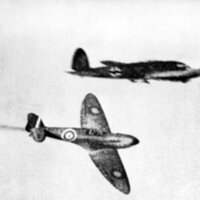
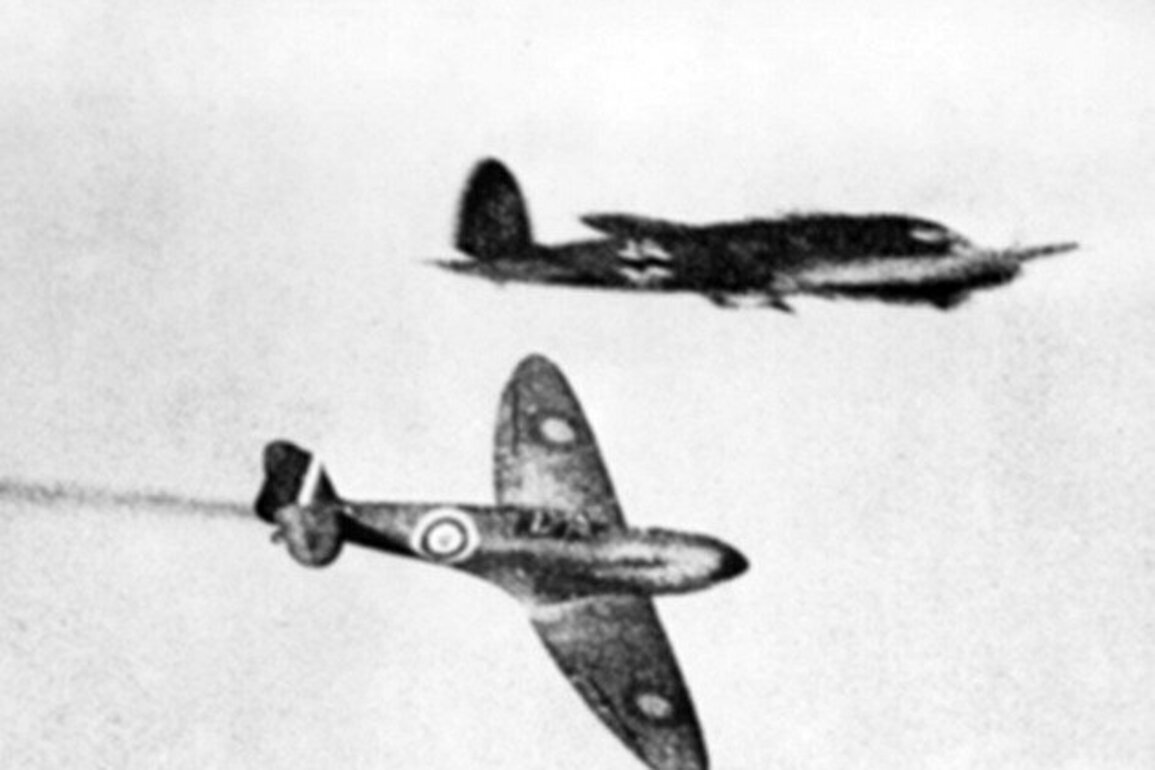
TheHurricaneentered service in 1937, theSpitfirein 1938. TheChain Home radar networkarguably the single most important force multiplier of the war was authorised, funded, and built on his watch. TheMerlin engineprogramme, Fighter Command's operational architecture underDowding, and the expansion of pilot training all bear his fingerprint.
These are not diplomatic souvenirs. They are the physical plant of victory.
Australia should understand the point better than most, because Australia was part of it.
In September 1938,Joseph Lyons' government made unmistakably clear, through Cabinet telegrams to London andtraffic with the Dominion Office, that Australia would not fight over the Sudetenland. Our army was a skeleton, our air force derisory, our navy a handful of cruisers.
The same was true of Canada and South Africa. No Chamberlain war in 1938 meant no Commonwealth war in 1938 becausethe Dominions were not ready, and Canberra knew it. TheMunichpremium was paid by Britain, but it was paid on Australia's behalf at least as much as on Britain's.
Now the harder case, because the serious revisionist critics deserve a serious answer.
Adam ToozeandRichard Overyhave argued, persuasively, that the "buying time" defence of Munich understates what Britain paid and overstates what Germany suffered.
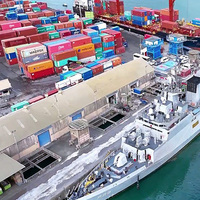
Australias $300b AUKUS bet hinges on Britains submarine capacityThe arrival of Britains HMS Anson in Western Australia highlights the historic ties, industrial risks and strategic stakes behind Australias $300 billion AUKUS submarine pact.
The premium was real and heavy. Czechoslovakia possessed thirty-five mobilised divisions, a first-rate arms industry centred on thekoda Worksthen one of the largest in Europe formidable border fortifications in the Sudetenland, and gold reserves of some six million pounds, a portion of which theBank of England subsequently transferred to the Reichsbankin a squalid episode the Treasury has never fully lived down.
All of it fell into Hitler's hands. Roughly a quarter of the German tanks that rolled into France in May 1940 were of Czech design the LT-38, rebadged as thePanzer 38(t). koda's plants produced artillery and small arms for the Wehrmacht throughout the war. Germany did not merely waste eleven months. It absorbed a mid-sized industrial state and rearmed itself with Czech steel.
That is a fair indictment and must be conceded. But it does not overturn the options case. It sharpens it.
Because in option-pricing terms, Munich was a transaction, not a gift. Chamberlain paid an expensive premium Czechoslovakia's divisions, koda, the gold, the moral capital to keep Britain's strategic option alive. The question any auditor must then ask is whether the time value of the acquired asset exceeded the premium paid.
On the specific ledger of air power, which is the currency that decided 1940, it plainly did.
In September 1938,RAF Fighter Commandhad one operational Spitfire squadron and fewer than thirty of the aircraft in service; the Chain Home chain was a sparse lattice of unfinished masts; pilot training was undercooked, and the Dominions were unwilling to fight over Prague.
Who's making money? The arsenal trade after Ukraine and IranDefence is no longer a defensive trade, and nowhere is the question of who'sbuying, who'sbuilding, and who is being left behind more apparent than in Australia.
By July 1940, the RAF had some six hundred Spitfires on strength, a fully operational radar chain that could see a raid forming over thePas-de-Calaisbefore its engines warmed, and just enough trained pilots to absorb the losses that Dowding's margin required.
Germany acquired koda. Britain and through Britain, Australia acquired the instruments of its own survival. The trade was asymmetric, and history has stubbornly ratified it.
Hitler himself understood this better than his later admirers. In his Reichstag rages of 1939, he complained that Chamberlain had cheated him out of the war he wanted in 1938 a war the Wehrmacht, the Luftwaffe, and Germany's synthetic-fuel stocks were demonstrably less ready to fight than the mythology allows.
Jodl's diary andKeitel'sNuremberg testimonyconfirm it. The Fhrer's preferred 1938 war was the one Chamberlain denied him.
There is an Australian footnote that deserves airing, because it complicates the morality play our pundits import wholesale. In the winter of 1938,Robert Menziesthen Attorney-General in the Lyons governmenttoured Germanyand came back impressed, in his own phrase, by the "really spiritual quality" of Nazi organisation, though not by its ideology.
He supported appeasement. He became Prime Minister in April 1939 on Lyons' death anddeclared Australia at warthat September with a wireless address that has since entered the schoolbooks. The architect of post-war Australian conservatism, theLiberal Party's founding father, was a Munich man.
The analogical reflex in our public debate is selectively and conveniently amnesiac about that.
AUKUS ties nuclear anchor around Australia's neckThree years ago, Anthony Albanese signed Australia up to quite possibly the worst deal in our history.
TheGuilty Menpamphlet of 1940, written pseudonymously byMichael Foot,Frank Owen, andPeter Howardafter Dunkirk, performed a useful political function: it rallied a frightened country around a new government by scapegoating the old.
But scapegoat literature is a poor basis for strategic history, and the analogical reflex it seeded has done particular damage in Australia, where it is wheeled out to shut down any contemplation of diplomatic optionality with our largest trading partner.
Chamberlain's error was not that he negotiated. It was because he believed his counterparty. Those are different failures, and only the second is damning.
Which raises the question of the reflex that exists to suppress. What premium is Australia paying today, and for a capability that arrives if it arrives in the 2040s?
There is a broader point, and it is the one finance teaches. In conditions of radical uncertainty, the disciplined leader does not commit prematurely to a terminal strategy. He preserves optionality. He pays the premium. He invests the time in capability. He is judged correctly on whether the capability arrives before the option expires.
Chamberlain's did, and Australia got to the other side of 1940 because of it. When the last Hurricane climbed fromBiggin Hillon15 September 1940, it flew on wings funded, tooled, and scheduled by a chancellor-turned-prime-minister whom history has filed under weakness.
The man with the paper was also the man with the Spitfires. Australians, of all people, ought to remember whose time he bought.
ProfessorVince Hooperis a proud Australian-British citizen and professor of finance and discipline head at SP Jain School of Global Management with campuses in London, Dubai, Mumbai, Singapore and Sydney.
Related Articles
- Sky's 'War Cabinet' manufactures panic and prophecy over proof
- More bang for no bucks: Defence spending gets a rebrand
- Labor talks tough as U.S. pushes for defence hike
- Australian values key to rethinking defence strategy
- Australia's arms escalation is in the interest of no one but death